About DAY1DIET

A practical
response to how health actually works

Modern medicine is evolving from treating problems to preventing them.

Supplements help, but they don’t replace real food.

Evidence consistently points to nuts, seeds, and whole grains as foundational components of a healthy diet — and to excess sugar and salt as elements best kept in check.

We launched with DAILY CORE focusing on the first meal of the day not as a category, but as leverage: a moment when nutrition can meaningfully influence the day ahead.

DAY1DIET exists to turn that understanding into a repeatable daily habit.

From Medicine 2.0 to Medicine 3.0

Modern medicine is exceptionally good at fixing problems once they appear. Acute symptoms, urgent interventions, pharmaceutical solutions. This model — often described as Medicine 2.0 — has saved countless lives and remains indispensable.

But the science is unambiguous: what you do daily, before symptoms appear, determines how well and how long you thrive.

A growing body of research and clinical thinking — popularized by voices such as Peter Attia — points toward a new paradigm, sometimes called Medicine 3.0. One that shifts focus upstream: from reaction to prevention, from lifespan to healthspan, from emergencies to daily habits.

What we eat. How we move. How we sleep. How consistently we show up for our own biology.

Decades of research suggest that diet and lifestyle play a central role in shaping metabolic balance, cognitive performance, and long-term physiological resilience.

Food is not merely fuel; it is information—one of the most frequent and cumulative signals we send to our body, every single day.

DAY1DIET exists within this shift.

Not as a medical intervention, but as a practical response to a simple realization: we eat over one ton of food every year — the habits we repeat daily tend to matter more, over time, than the fixes we reach for occasionally.

Supplements Are Powerful —
But They Are Not a Diet

The supplements industry has achieved something remarkable. It has made nutrients, compounds, and functional ingredients accessible in ways that would otherwise be impractical or impossible for most people. Proteins, fibers, probiotics, vitamins, minerals—often delivered with precision and convenience.

We respect that. We use supplements ourselves. But supplements are not, and cannot be, a replacement for a coherent diet.

Even high-quality supplementation is limited if the underlying eating pattern remains irregular, nutrient-poor, or poorly structured. In many cases, supplementation without a solid dietary foundation becomes a form of compensation rather than optimization.

DAY1DIET was designed to close that gap.

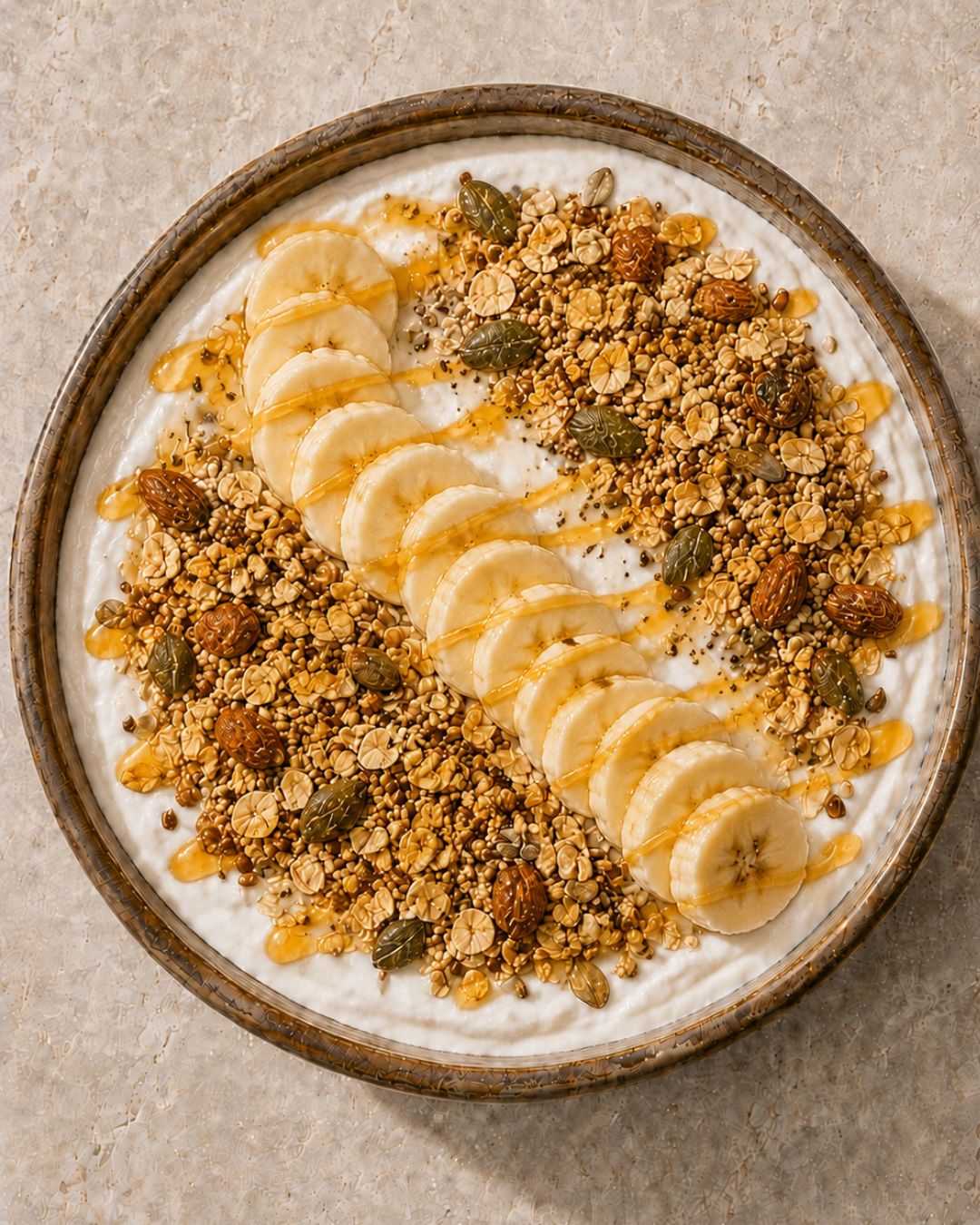
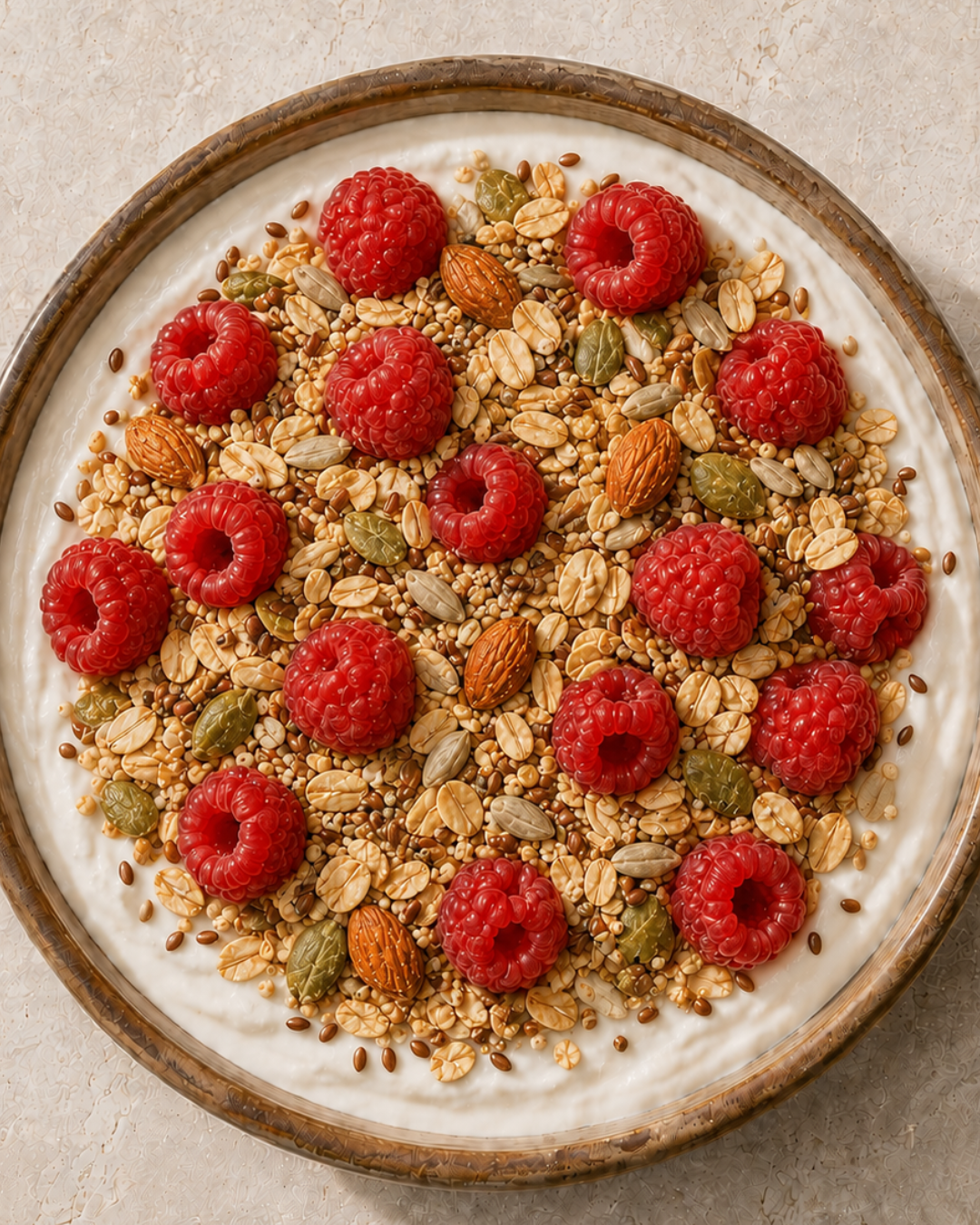
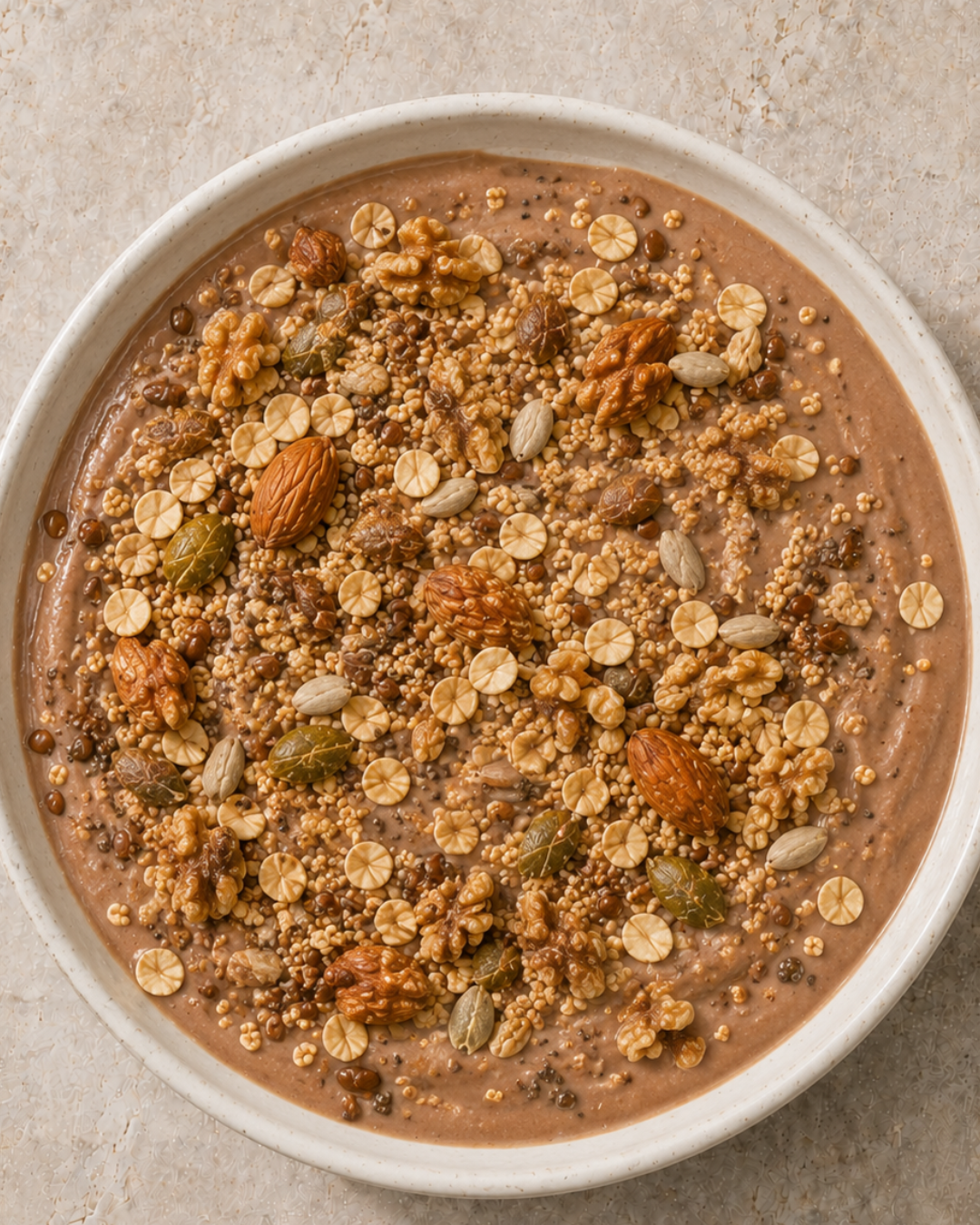
It is real food, not a pill or a functional promise. One that delivers many of the nutritional elements people often seek from supplements — protein, dietary fiber, soluble fiber, prebiotics, probiotics, healthy fats such as Omega-3 fatty acids, vitamins, minerals — while also doing something supplements cannot: providing a satisfying and structured eating experience. Supporting satiety. Slowing digestion. Offering the body something substantial to work with.

We are not opposed to supplements. We simply believe they work best when built on top of real food, not when asked to substitute for it.

Why Nuts, Seeds, and Whole Grains — Without Ideology

At DAY1DIET, we deliberately chose to start our journey working with nuts, seeds, herbs, and plant-based whole foods. Not because we subscribe to a specific diet, but because we follow evidence where it is most consistent.

One of the most extensive review of pooled meta-analyses and systematic reviews (PubMed reference 25406801) highlights how across large populations and long time horizons, nuts and seeds and whole grains emerge among the food categories most consistently associated with positive dietary patterns. Conversely, excess intake of sugar and salt is repeatedly associated with less favorable outcomes when consumed beyond recommended levels.

This does not make other foods “bad,” nor does it invalidate any particular dietary approach. DAY1DIET is not a diet ideology. It can be combined with omnivorous, vegetarian, vegan, low-carbohydrate, or mixed eating patterns.

We simply chose to focus where the largest gap and highest leverage tend to exist: nutrients many people under-consume, delivered through ingredients that have shown consistent relevance at population scale. The goal is not restriction. It is reinforcement—adding what is often missing, rather than excluding what is not.

Why We Start
the Day Here

(And Why We’re Not a Breakfast Company)

DAY1DIET is often associated with breakfast, but we are not a “breakfast brand."

We started our journey with DAILY CORE focusing on the first meal of the day because it is metabolically distinctive. It comes at the moment we literally break fast, when physiological responses to food intake—such as insulin and lipid handling—are typically more pronounced. What we eat at this moment can influence how the day unfolds in terms of perceived energy, satiety, and appetite regulation.

That first meal sets the tone—both physiologically and psychologically—for what follows. Energy levels. Cravings. Focus. Eating behavior later in the day.

Start the Day Nutritionally Dense

Starting the day with a high-sugar, low-fiber, low-nutrient meal often makes the rest of the day harder, leading many people to compensate later. Starting with something nutritionally dense and fiber-rich tends to make the day more manageable, not more restrictive.

We often say: if you want to occasionally treat yourself to something sweet in the morning, have it — but after DAILY CORE. The presence of dietary fibers, soluble fibers, prebiotics, and probiotics can help buffer glycemic responses and support a steadier energy experience throughout the morning.

Breakfast is not about rules. It is about leverage. It is the earliest opportunity each day to put yourself slightly ahead of the curve.

DAILY CORE was designed to make that advantage repeatable.

This content is intended for educational purposes and reflects general nutritional principles, not medical advice.